Craving the Unexpected: How Variable Rewards Hijack Attention and Make Habits Stick
Decades ago, researchers placed pigeons in a box and discovered something remarkable: when the birds received food pellets randomly, rather than on a predictable schedule, they pecked the lever far more frequently. This principle, known as variable reinforcement, underpins much of our modern experience with addictive products—from slot machines to endlessly refreshing social feeds.
The anticipation of a reward releases dopamine, a neurotransmitter that sharpens focus and fuels desire. It’s the “what will I get this time?” feeling that makes people check email, scroll through Instagram, or line up for lottery tickets. Modern technologies masterfully exploit this tendency by blending different types of variable rewards: social affirmation from others, the thrill of discovering something new, and the pride of mastering a personal challenge.
Take social media as an example. Every time someone posts or checks a notification, they’re unsure what they’ll find—maybe a new message, maybe nothing. The uncertainty is what makes it irresistible. In more productive contexts, educators and trainers use variable rewards to keep learners engaged with surprise quizzes, badges, or unexpected praise.
What’s critical is that the variety and unpredictability of the reward—rather than the magnitude—are what keep us coming back. The science shows variable rewards are exponentially more effective than predictable ones for reinforcing habits. However, if the surprise vanishes and outcomes become routine and expected, engagement drops sharply. Building in the right kind of variability is both an art and a science.
Pick something in your life—maybe your workout, your study routine, or even the way you reward your team—that could use a boost of excitement. Look closely at what keeps people (or you) returning: is it a surprise, a social shout-out, or the thrill of learning something new? Switch things up by adding a rotating element: surprise messages, a new challenge, or a random small treat. Pay attention to whether you start to crave the next ‘surprise’—if so, you’re tapping into the healthy power of variable rewards.
What You'll Achieve
You will unlock more reliable motivation for yourself and the people around you, increase engagement with key habits, and enhance creativity and enthusiasm in daily tasks.
Design Variety and Surprise Into Rewards
Identify one habit or product you return to frequently.
This could be a social app, game, daily treat, or even a workout routine.
List the different types of rewards you receive.
Do you get social validation (likes, comments), novelty (new content), material gain (points, money), or a sense of achievement?
Brainstorm ways to introduce positive unpredictability.
How can you add variety to the reward mix—random encouragement notes, rotating games, or changing up the routine?
Evaluate if the reward keeps you coming back ‘wanting more’ instead of feeling finished.
Ask yourself if the unpredictability still feels exciting, or if it has become stale and predictable.
Reflection Questions
- Which activities in my routine feel exciting because of their unpredictability?
- Am I relying on only one kind of reward? What other types could I try?
- Can I design healthy surprises into my routines to boost engagement without causing stress?
Personalization Tips
- Fitness: Joining group classes where the routine changes each session keeps you interested.
- Learning: Randomizing the topics you study each week can boost motivation by breaking monotony.
- Parenting: Surprise children with ‘mystery rewards’ for chores—sometimes praise, sometimes a fun game.
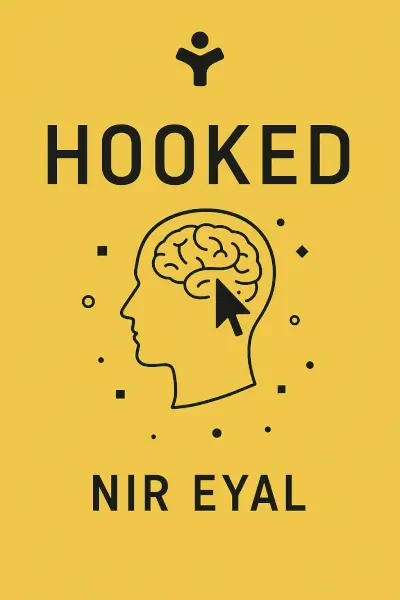
Hooked: How to Build Habit-Forming Products
Ready to Take Action?
Get the Mentorist app and turn insights like these into daily habits.