Why Making It Easy Beats Motivation: The Counterintuitive Path to Consistent Action
People often believe if they just wanted something badly enough, they’d do it. But motivation, behavioral scientists have found, is a fleeting companion—especially when life gets busy or obstacles pile up. A closer look at habit-building reveals a powerful and often overlooked truth: making an action easier is far more effective than simply wanting it more. This principle is at the heart of the Fogg Behavior Model, which shows that behavior happens when motivation, ability (ease), and a clear trigger align.
Take, for example, the transformation of digital habits. In the early days of the internet, just checking your email involved multiple steps and waiting for dial-up. Yet people still did it, because it solved real problems. As technology made email instant and accessible, people began checking it constantly—even without stronger motivation, simply because it became almost effortless. The ease of the action superseded the need for deliberate motivation.
Across all domains, lowering friction leads to better follow-through than pep talks or willpower. Health apps that let you log a meal with one tap see dramatically higher user engagement. Students who keep their notebooks open and ready on the desk are more likely to start their homework right after dinner. The underlying psychology is clear: human brains conserve energy, so if something takes less effort than the alternative, most of us will do it without much thought.
These tiny shifts add up. When you design your life or products for absolute simplicity—fewer clicks, fewer keystrokes, less time deciding—you create an environment where your intended actions nearly complete themselves. That’s why, regardless of your willpower on any given day, seamless systems outperform intentions.
Pick a single habit you want to work on, then break down every step it takes to get started. Now, look for any tiny bits of friction—maybe it’s walking upstairs to find your journal, or opening several tabs to log your work hours. Take one step today to reduce that obstacle: put your tools within arm’s reach, use reminders, automate what you can, and tackle your toughest bottleneck (like indecision or awkwardness) head-on. You’ll be amazed at how much more often you follow through once it’s easy to begin.
What You'll Achieve
You’ll develop a mindset focused on practical design and environment shaping, leading to more consistent follow-through on goals and fewer missed opportunities due to inertia.
Remove Friction Before Boosting Motivation
Choose one routine you wish you did more often.
Pick a specific behavior, like stretching after work, writing daily, or messaging a friend.
List all steps and obstacles involved.
Write down each part of the process and any places where you hesitate, feel confused, or get distracted.
Simplify the action until it’s almost automatic.
Shorten, automate, or prepare in advance (e.g., lay out your exercise mat, pre-address a message draft, place your notebook by your bed).
Test for 'scarce resource' bottlenecks and address the hardest part.
Is your real obstacle time, energy, social discomfort, or feeling out of routine? Solve for this first.
Reflection Questions
- Where do I usually give up or procrastinate on good intentions?
- Is motivation really my obstacle, or is something about the task’s setup slowing me down?
- How can I simplify my desired action until it feels nearly automatic?
Personalization Tips
- Work: If preparing a report is difficult, create a template and start with placeholder headings.
- Health: Place your running shoes by the door to minimize effort for a morning run.
- Relationships: Schedule a recurring reminder to call a family member at an easy, predictable time.
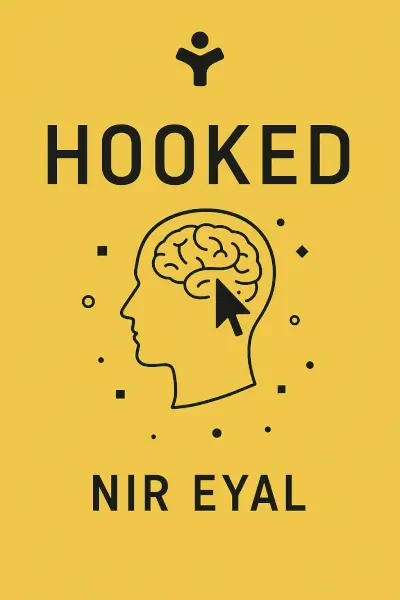
Hooked: How to Build Habit-Forming Products
Ready to Take Action?
Get the Mentorist app and turn insights like these into daily habits.