Achieving True Product-Market Fit Takes Relentless, Honest Testing—Not Guesswork
After eighteen months, Theo’s project—a subscription platform for comic artists—finally crossed 100 paying members. The numbers looked promising at first, but churn rose every month. One night, he ran a simple survey, asking a blunt question: 'How disappointed would you be if you could no longer use our service?'
Half the responses were lukewarm. A core group said, 'I’d really miss it—I use it every morning.' But many replied, 'I could live without it.' Theo dug into the feedback and realized his growth depended on a small but passionate group. With validation in hand, he doubled down on serving this segment, improving features they valued and inviting their friends. His numbers stabilized, revenue per user improved, and word-of-mouth picked up.
He stopped caring about surface-level popularity. From then on, Theo measured true product-market fit by his users’ emotional connection, not just his signup count. When one or two people left, he messaged to ask why and learned even more about what mattered.
Product-market fit isn’t just an industry buzzword—it’s the tested, data-driven crossing from 'nice-to-have' to 'can’t-live-without.' Only then does scaling make sense.
Develop a simple way to ask your current users or testers how strongly they’d miss your product if it disappeared today. Assess whether they’re truly attached—and check if your market is sufficiently large and profitable. Focus improvement efforts on what your most passionate users want, using clear numbers and honest replies as your guide. Go beyond vanity metrics and find the true heart of your solution, starting with a survey this week.
What You'll Achieve
You’ll stop wasting resources on guesswork, discover what your customers genuinely need, and know when you’re ready to grow. Internally, you’ll gain clarity and confidence.
Measure What Would Be Lost If Your Product Disappeared
Survey or interview a representative sample of active users.
Ask them directly how disappointed they’d be if your solution were no longer available.
Look for strong emotional attachment in addition to usage numbers.
Track not just engagement but 'pain of loss'—would at least 40% of users be 'very disappointed' to lose your product?
Benchmark your growth against segment size and willingness to pay.
Check if your market is big enough and your acquisition costs align with what people actually pay.
Reflection Questions
- How would I feel if my product vanished tomorrow—what about my customers?
- What are the most compelling reasons users stick around?
- Is my market big enough to sustain my growth goals?
Personalization Tips
- A group chat app developer asks a pilot group 'how much would you miss us?' and gets honest replies.
- A local tutoring service checks parents’ willingness to pay if free sessions ended.
- An art streaming platform reviews paying users’ feedback to gauge real value perception.
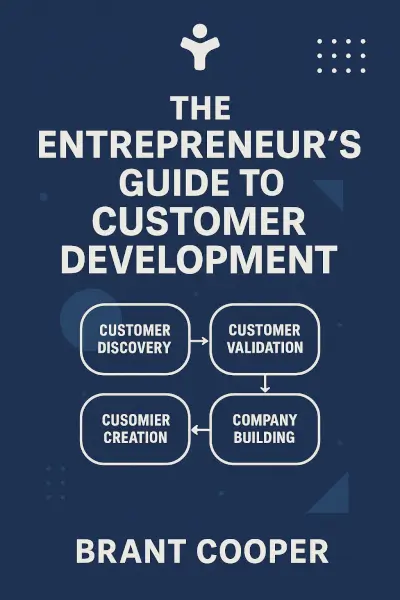
The Entrepreneur's Guide to Customer Development: A cheat sheet to The Four Steps to the Epiphany
Ready to Take Action?
Get the Mentorist app and turn insights like these into daily habits.