The Risk of Building Before Testing—How 'Minimum Viable Product' Uncovers Truth Quickly
Sanjay had a bold solution: an app to help teens manage anxiety. He designed screens, hired a part-time developer with his summer savings, and six weeks in, felt proud of the progress. But the only people who’d seen it were his friends, and the sign-ups were stuck at zero. His bank account was nearly empty, with nothing to show but a nearly finished app missing the mark.
Frustrated, Sanjay paused and remembered advice from an older mentor: build only what you need to test if anyone cares. He took a step back and crafted a single-page website with a short description and a mockup image, then promoted it in mental health support groups. Within days, a dozen students signed up for a 'beta,' providing far more feedback than he ever got building in isolation.
The comments surprised Sanjay: people wanted chatbot support and resource links, not just meditation timers. He realized he’d spent weeks perfecting features no one wanted. Armed with this learning, he pivoted the direction, saving money and time.
The Minimum Viable Product (MVP) approach isn’t about launching with a half-finished idea—it’s about validating interest with the lowest investment possible. Startups from Dropbox to Airbnb practice this, using quick, testable launches to find out what people actually do, not just what they say.
Start by writing your MVP’s single most important test goal—and cut away every feature that doesn’t contribute directly to it. Build just enough to put something—anything—real in front of your target users, like a poster, a landing page, or a demo. Pay close attention to what users actually do, not just what they say, and use this learning as your foundation. You'll move faster and waste far less. Try building and sharing your first MVP this week—it’ll teach you more than three months of theorizing.
What You'll Achieve
Less wasted time, earlier ‘hard truth’ about your product or idea, and a faster cycle of improvement. You'll develop a bias for action and learn to love fast, inexpensive failures that lead to big wins.
Create a Tiny, Testable Version of Your Solution
Define the essential goal your MVP must achieve.
List what the 'minimum' success looks like—such as 50 people signing up or 10 users saying they'd pay.
Identify the smallest set of features or experiences required to test that goal.
Strip out non-essential elements. For example, use a landing page with a signup button or a working prototype—even if it's ugly.
Launch your MVP to real users and measure actual behavior.
Get feedback through signups, pilot trials, pre-orders, or real usage. Focus on actions, not opinions.
Reflection Questions
- What’s the most important thing I need to prove about my idea?
- How can I test that quickly, without building the full solution?
- Have I been delaying feedback because of perfectionism or fear?
Personalization Tips
- A guitar tutor offers a single 30-minute free group lesson before building a whole online course.
- A group fitness leader puts up a simple poster inviting signups and tracks who shows up before buying pricey equipment.
- A student organization creates a digital flyer with a 'join interest' link for a new club before planning any meetings.
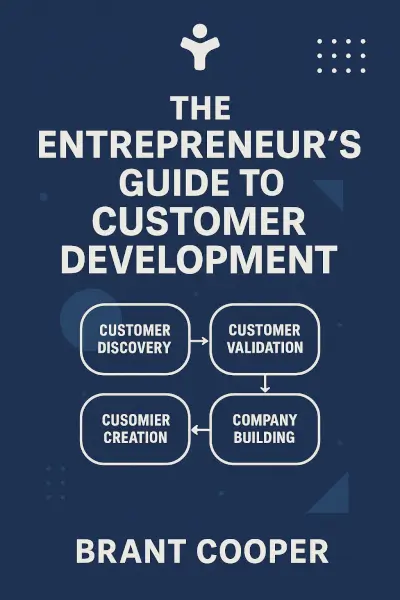
The Entrepreneur's Guide to Customer Development: A cheat sheet to The Four Steps to the Epiphany
Ready to Take Action?
Get the Mentorist app and turn insights like these into daily habits.