Why You Must Turn Every Assumption Into a Testable Hypothesis
You stare at your team’s whiteboard, crowded with bullet points and dreams. There’s a warm mug of coffee by your laptop, turning lukewarm as you circle the big assumption scrawled in the middle: 'People will pay for our delivery service because it's more convenient.' You realize nobody’s actually asked a real person about this belief. It feels true, but you can’t deny the worry that maybe you’re just echoing each other’s optimism.
The next morning, pen in hand, you make a new habit: before any feature gets built, every idea about customers or product value must appear on paper. As you read your sentences back, they sound more fragile—less certain but more honest. You recognize where your logic leaps past evidence. 'Our ideal customer is a busy parent.' You pause: is that just what makes sense to you, or do you know it for a fact?
Later, you sketch hypotheses: 'If we offer a 2-hour delivery window, at least half of prospective customers will pick us over a competitor.' You feel both relief (it’s something you can actually check) and unease (what if you’re wrong?). That unease dulls as you remember that progress depends on confronting reality, not protecting pride. Over a week, your log of assumptions grows, along with your willingness to see them tested.
This approach mirrors the foundations of scientific thinking—turning complex hunches into falsifiable hypotheses. Documenting avoids memory bias and holds you accountable, giving you a constant source of truth as you iterate. The power comes not from being right at first, but from seeing clearly where you need evidence to move forward.
Today, take five minutes to jot down your first beliefs about who your customers are, the problem you think you’re solving, and why your solution is valuable. Don’t just keep these ideas in your head—write them in a journal or a plain digital document. Then pick one statement and turn it into a hypothesis you can actually test in the real world, such as by planning a short conversation with someone in your network. By putting your assumptions on paper, you’ll spot what you need to check next and break free from guesswork. Give it a try tonight—your future strategy will thank you.
What You'll Achieve
You’ll develop clear thinking, reduce self-deception, and build a business based on evidence. Expect sharper focus, better problem prioritization, and confidence to let go of ideas that don’t hold up.
Write Out Your Core Business Assumptions Today
List your current beliefs about your customer, problem, and solution.
Identify the key ideas you’re betting your business on. For each, write a one-sentence statement describing what you think is true (such as, 'Small business owners struggle to track marketing ROI using current tools').
Rephrase each belief as a testable hypothesis.
Change broad statements into forms that can be proven or disproven. For example, 'If offered an easy-to-use analytics tool, at least 3 out of 5 SMB owners will sign up for a free trial.'
Write them down in a dedicated journal or digital document.
Documenting makes your thinking explicit and prevents 'memory drift.' It also helps you track which ideas you’ve tested and what you still assume.
Plan how you would test one hypothesis this week.
Choose a method—interviews, surveys, MVP tests—and decide on a first concrete step. Focus on facts, not wishful thinking.
Reflection Questions
- Which of my beliefs about my customers might be little more than guesses?
- What’s the worst downside of discovering an assumption is wrong? What’s the upside?
- Do I tend to remember ideas in ways that favor my project?
- How will I hold myself accountable to track—and act on—what I learn?
Personalization Tips
- If you're launching a coaching service, hypothesize that parents are willing to pay for coaching to help their teens with online learning.
- A health app team could state, 'People with type 2 diabetes will track meals daily if the process takes less than a minute.'
- For a nonprofit, hypothesize that volunteers will commit at least 2 hours per month if scheduling is flexible via an app.
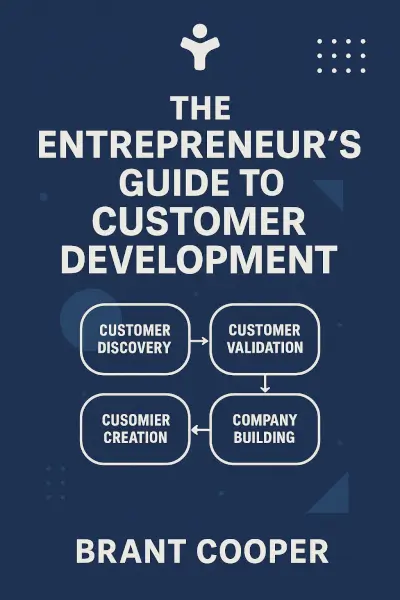
The Entrepreneur's Guide to Customer Development: A cheat sheet to The Four Steps to the Epiphany
Ready to Take Action?
Get the Mentorist app and turn insights like these into daily habits.