Working for Beauty and Craft: Why Software and Art Demand Relentless Creativity
When you picture great software, you might imagine clean lines of code, fast running times, or cool features—but step back, and you’ll see creation works a lot like art. The best apps start as rough drafts, with ideas scribbled out or barely working versions cobbled together before anyone sees them. Developers often run through cycles: building, breaking, learning, then building better. Just as a skilled painter covers up old brush strokes or a novelist rewrites entire chapters, the best makers never settle for their first attempt.
It’s not just about how things look on the surface. The obsessive work beneath—the code no user will see, the background details in a painting, the structure of a story—shapes the quality of the final result. Think about legends like Leonardo meticulously painting every leaf behind his subject, or top programmers using variable names and formatting that make hidden logic beautiful.
In both art and technology, this relentless focus on details, iteration, and learning from other disciplines pays off. Studies in behavioral science confirm that real expertise is built on cycles of deep practice, experimentation, and gradual improvement. The willingness to rewrite, refactor, and push through repeated failures is what separates the ordinary from the extraordinary. The craft of making is universal: no matter your field, greatness comes from working—again and again—like an artist.
On your next project, start rough and give yourself permission to sketch out wild ideas before worrying about perfection. Then, dive into cycles of improvement—each time you review your work, focus on refining one more detail, even the parts others won't notice. Make a point of turning to artists or creators in other fields for inspiration on process and polish. Push yourself to finish the invisible details, knowing good craft always rises to the surface. Try this approach, and watch your work transform.
What You'll Achieve
Develop greater confidence in creative problem solving, deliver higher-quality projects, and feel proud of your work's attention to detail, no matter how small.
Work Like an Artist—Refine, Iterate, and Sweat the Details
Start your next project by freely sketching or prototyping.
Whether writing code, designing, or planning, allow yourself to create rough drafts or playful experiments before setting strict rules or permanent decisions.
Refine your work through cycles of iteration.
Revisit your initial ideas repeatedly, adjusting and improving as you go. Each pass should add or fix details, just as a painter touches up a canvas.
Devote energy to unseen details.
Polish parts of your project that may not be public or visible, knowing their quality will influence the overall experience—like well-structured code or clean design.
Seek inspiration across disciplines—including art and other crafts.
Observe how artists, writers, or architects approach their creative process, borrowing strategies for exploration, craftsmanship, and relentless improvement.
Reflection Questions
- Which parts of my work do I usually neglect or hide—how might improving them change the whole?
- How do I respond to the need for multiple drafts or rework—excited, frustrated, or something else?
- Who in another field could inspire me to improve my creative process?
Personalization Tips
- A designer sketches multiple website layouts by hand before choosing one to digitize.
- A student revises a research paper four times, improving each paragraph even if it won’t be graded on writing style.
- A coder comments and organizes their codebase after launch, knowing it’ll pay off when adding features later.
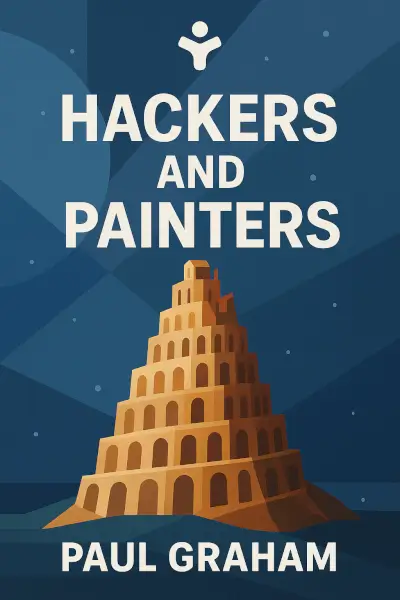
Hackers and Painters: Big Ideas from the Computer Age
Ready to Take Action?
Get the Mentorist app and turn insights like these into daily habits.