How 'Creative Destruction' Prevents Businesses (and People) From Growing Old
In the world of business and innovation, sticking loyally to what has worked in the past is a recipe for quiet decline. The principle of 'creative destruction'—originally coined by Joseph Schumpeter and echoed in high-growth environments like Silicon Valley—holds that lasting success comes not from resting on past achievements, but from constantly reinventing or even destroying your own winning strategies before someone else does.
A classic case: Companies that once dominated their industries, from blockbuster video rental chains to old tech giants, faded because they feared undercutting their core products. Contrast that with disruptive leaders who obsessively sought out ways to make their own best ideas obsolete—often introducing riskier, cheaper, or easier-to-use offerings before rivals had a chance.
This isn't just a business issue; it’s a mindset shift. Creative destruction means you view your proudest achievements not as sacred but as starting points for your next leap. Psychologically, it requires humility and courage, as well as a willingness to question your ego’s attachment to being right or best. Scientific models like 'double-loop learning' show that those who can challenge their own assumptions and processes—especially when things are going well—adapt faster and stay ahead of change.
In Silicon Valley, the greatest creators learn to cannibalize their own success, understanding that real growth means making yourself a little bit uncomfortable in order to build what’s next. The result: greater innovation, relevancy, and resilience—even as markets and needs change.
Start today by writing down the achievements or routines you’re most known for, then honestly ask yourself how each could be beaten or improved—by you, not someone else. Pick one area and sketch how you’d disrupt your own way of doing things, even if it feels like a betrayal of what’s previously worked. Find a peer to bounce your radical revision off of and welcome their ruthless feedback. It’s uncomfortable, but practicing this habit is the surest way to avoid growing stagnant, whether in a company, a classroom, or your personal goals. Bet on your ability to outgrow your past.
What You'll Achieve
You’ll break free of complacency, stay ahead of change, and prevent burnout or irrelevance. Externally, this leads to more innovative projects and personal reinvention—often before competitors, colleagues, or life circumstances force your hand.
Adopt 'Creatively Cannibalizing' Your Own Best Work
Review Your Top Accomplishments.
Write down the projects, ideas, or habits you’re most proud of in the past year.
Ask Yourself How Each Could Be Undermined.
For each accomplishment, honestly note at least one way your own approach could be made better, cheaper, or more fun by someone else—think like your own competitor.
Design a Version That Outdoes Your Current Standard.
Pick one accomplishment and sketch a way to improve it drastically, even if it means discarding beloved features or traditions. Be ruthless.
Gather Feedback From Others.
Share your new version with a friend, colleague, or mentor and ask, 'What would make this even stronger if you ignored the old way?'
Reflection Questions
- What’s the best thing I do today that could be improved or made irrelevant tomorrow?
- How comfortable am I with challenging my own best work?
- Who could give me honest feedback to make my current strategy stronger?
- How would I rebuild my approach if I started from scratch?
- When was the last time I deliberately disrupted something that was 'good enough'?
Personalization Tips
- A musician challenges their favorite song by remixing it into a different genre, rather than just playing it safe.
- A manager redesigns a workflow that already works well but could be automated, risking their own badge of honor for greater efficiency.
- A student questions if their signature study method still works or tries a radically new approach to boost retention.
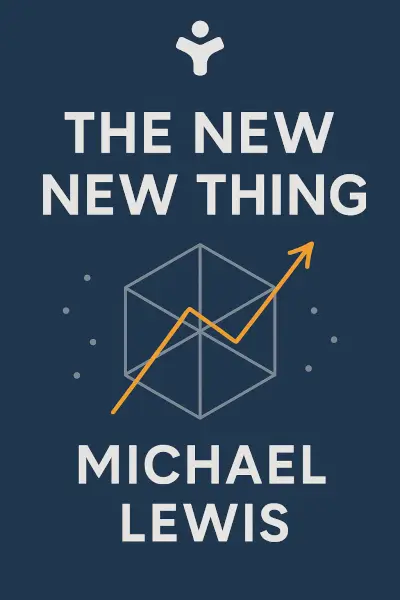
The New New Thing: A Silicon Valley Story
Ready to Take Action?
Get the Mentorist app and turn insights like these into daily habits.