Why the Fastest Startups Win: Mastering Iteration, Pivots, and Learning Loops
Every Thursday, a small software team gathers around a cluttered whiteboard, the air humming with quiet urgency. Their business model canvas sports flurries of red and yellow Post-its—last week’s experiment flopped, but a new idea for user onboarding is already brewing. Earlier that month, the team launched a feature based on gut instinct. Nobody used it. Instead of debating for days or mourning the setback, they decide: drop the feature, survey users about their workflows, and test a no-frills version by Monday.
By week’s end, they see a spike in user messages. One complaint repeats: users want clearer payment options upfront. They adjust—next week’s goal is to test three signup flows, tracking which one reduces drop-off. Mistakes are logged, not buried, and every meeting starts with 'What did we learn this cycle?' The rhythm is relentless, but energy is high—the last pivot doubled their paying users in two sprints.
Contrast this with a rival startup down the street. Stuck on their original plan, they grind on, weeks passing with little to show but frustration.
This weekly cadence—rapid experiment, quick learn, and honest course correction—proves the real edge. Scientific research affirms that frequent feedback and fast cycle times foster a learning culture, boost adaptability, and create organizations that outpace rivals. In a startup, speed isn’t just an advantage—it’s survival.
Set a day each week that’s dedicated to reviewing what you learned, with your current ‘business model canvas’ as your visual scoreboard. For every experiment, keep it simple—decide what you want to learn, design a basic pass-or-fail test, and don’t drag your feet waiting for perfection. When something doesn’t work out, resist the urge to defend the old way—instead, erase and redraw, even if it stings. The cycle is fast but manageable, and the more routine it becomes, the easier you’ll catch patterns and seize new wins. Stick with this pace and see how quickly your idea evolves.
What You'll Achieve
You’ll develop a proactive habit of learning from every attempt and avoid costly delays. This approach builds confidence in making changes fast, and helps you identify new opportunities before running out of resources.
Test, Learn, Iterate, and Pivot on a Weekly Basis
Adopt weekly learning cycles.
Block time each week to update your business model canvas and review results of your latest tests. Highlight changes in red so learning is visible.
Design simple, pass/fail experiments.
For each open question, create a single variable test (like an A/B split), aiming to learn quickly. Only move forward when results are clear.
Pivot boldly when assumptions fail.
If a hypothesis is wrong, rewrite that part of your plan—be it product, channel, or pricing—rather than doubling down on failure.
Reflection Questions
- Are you more likely to stick with a plan or test a change when things fail?
- How can you celebrate discoveries, even when they mean letting go of a favorite idea?
- Where in your current process can you speed up your learning loop by a day or more?
Personalization Tips
- In your personal blog, try changing your newsletter signup prompt and see which message gets more people to sign up by the next week.
- For a school fundraiser, run two flyers with different pitches in two classes and compare which one gets more parent responses.
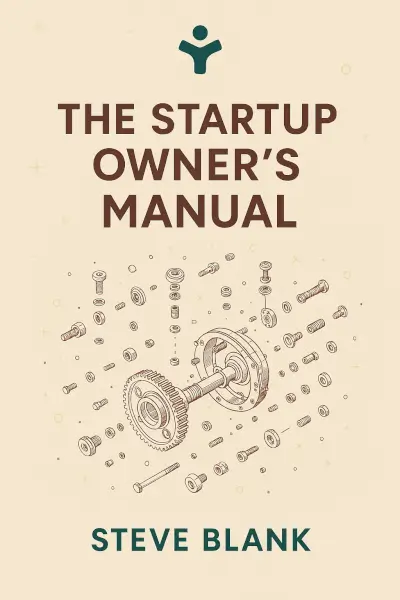
The Startup Owner's Manual: The Step-By-Step Guide for Building a Great Company
Ready to Take Action?
Get the Mentorist app and turn insights like these into daily habits.