How to Parent Without Repeating or Overcorrecting Your Mother’s Mistakes
Parenthood turns childhood memories into living questions. Every boundary, every word of encouragement, stirs echoes of how your mother behaved. Sometimes you catch yourself clinging to the opposite pole—afraid to smother, you step back too far. Determined not to ignore, you hover with praise and involvement that grows exhausting. When your child struggles, your own childhood anxieties flare, and you wonder if you’re making things worse by overcorrecting.
In quieter moments, pen in hand or while folding laundry, you start to tease apart what you truly value: kindness, resilience, honesty—not just being clean or looking put-together. You catch yourself, mid-sentence, aiming for the middle: not perfection, not abandonment, but mindful engagement. There are missteps, sometimes tears, and a few sweet wins—your child sharing something real, a moment of connection you never got.
Developmental psychology calls this 'mindful parenting'—learning to balance your reactions so you avoid passing on inherited extremes. Self-awareness, plus steady, honest self-correction, proves far more powerful than either strict imitation or full rebellion against the past.
It’s natural to fear becoming your mother or swinging too far the other way. Write down your biggest fears, then pay attention to times when your instinct is to overcorrect. Clarify your unique parenting values and pick a small way to put those into practice—like listening with empathy or setting a gentle limit. Let go of the pressure to be perfect, and keep steering toward the middle ground that fits both you and your child. Every day is a fresh chance.
What You'll Achieve
Break cycles of inherited parenting extremes, raise emotionally healthy children, and gain confidence in your own values and style as a parent.
Find the Balanced Middle Ground in Parenting
List specific parenting fears or anxieties you have.
Describe times you're most afraid of becoming like your mother, or veering to the other extreme.
Identify moments you’ve acted opposite from your mother's style.
Note if you've overcompensated—by giving too much freedom or praise, for example. Write down what happened and how your child responded.
Define your own parenting values independent of reaction.
Articulate what matters most to you as a parent—not just in contrast to your upbringing, but as your own ideal.
Try one small, intentional behavior that reflects your chosen value.
Do something that fits your authentic parenting style, such as listening empathetically or setting consistent boundaries.
Reflection Questions
- In what ways do you fear repeating your mother’s mistakes?
- Where have you found yourself overcorrecting, and how did it feel?
- What do you want your children to remember about your parenting?
- How can you return to your core values amid parenting stress?
Personalization Tips
- If you feared smothering your child: Give them room to explore but stay emotionally available for check-ins.
- If you worried about ignoring feelings: Practice reflecting your child’s emotions back to them without fixing or dismissing.
- If you overpraised achievements: Focus on encouraging effort, kindness, or curiosity instead.
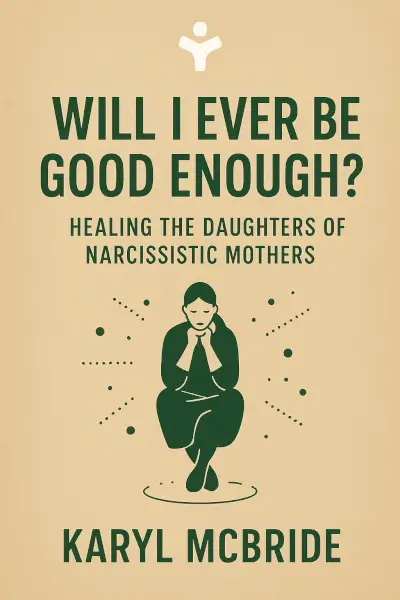
Will I Ever Be Good Enough? Healing the Daughters of Narcissistic Mothers
Ready to Take Action?
Get the Mentorist app and turn insights like these into daily habits.