How Codependency and Dependency Sabotage Healthy Relationships—And What to Do Instead
Maybe in every relationship, you found yourself fixing, nurturing, or quietly hoping someone would take care of you. After a string of disappointments, you realized your love life looked eerily familiar—like the scripts you learned at home. At first, you blamed your partner, but the pattern kept repeating: you gave too much or demanded too much, constantly circling between resentment and empty hope that the next time would be different.
Over time, it dawned on you that codependency (needing to care for someone else to feel valuable) and dependency (relying on someone else for your sense of worth) are two sides of the same coin—forms of connection where you never feel truly seen for yourself. It took a few clumsy tries, but you started setting small boundaries and sharing how you actually felt. Sometimes it led to awkwardness, but you noticed a thread of relief—a sense of empowerment, even when things stayed messy on the surface.
Attachment theory and research on family systems show these patterns are learned, and that shifting them takes conscious, patient effort. Practicing low-stakes honesty and self-care becomes the foundation for healthy adult relationships built on mutual respect rather than need.
Begin noticing your default role in relationships—caretaker or over-leaning—and remember it’s a pattern, not your identity. Try setting a small boundary or naming an honest need in a safe situation, even if it feels uncomfortable at first. Applaud yourself for the risk; with repeated practice, you’ll build more balanced, authentic connections that reflect your real self, not old scripts.
What You'll Achieve
Create more balanced, respectful relationships, minimize cycles of resentment or disappointment, and build lasting self-esteem rooted in genuine connection.
Spot and Shift Unhealthy Love Patterns
Profile your typical role in relationships.
Are you most often the caretaker (codependent), the one who leans (dependent), or do you avoid relationships altogether? List examples.
Notice when your needs or boundaries get lost.
Reflect on times you gave up needs for someone else, or demanded too much from a partner. Write how it felt before, during, and after.
Set a boundary or share a true feeling in a low-stakes situation.
Pick a non-threatening interaction to practice saying 'no,' 'I need,' or 'I feel'—then track reactions and your emotions.
Celebrate courage, not perfection.
Regardless of the result, honor your willingness to be honest and care for yourself.
Reflection Questions
- What roles do you find yourself repeating in love and friendship?
- How do you feel when you set a boundary or prioritize your needs?
- Who in your life is supportive of your authentic self?
- What’s one thing you could say or do differently this week to disrupt old relational patterns?
Personalization Tips
- In romantic life: If you notice giving everything to keep a partner, take a day to prioritize your own plans.
- At work: If you struggle to delegate, practice asking for help or clarifying your needs on a small project.
- With friends: Share when you feel uncomfortable instead of just keeping the peace.
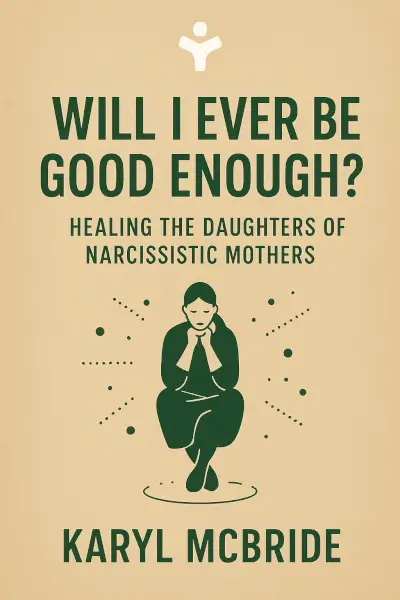
Will I Ever Be Good Enough? Healing the Daughters of Narcissistic Mothers
Ready to Take Action?
Get the Mentorist app and turn insights like these into daily habits.