The one thing every worried parent wants that no vaccine can ever give
The first story Eula Biss ever heard about immunity was not about medicine at all. It was the myth of Achilles, told to her by her father, a doctor, when she was a child. Achilles's mother tried to make her son immortal, dipping him in the River Styx while holding him by the heel, the one spot the water never touched. Years later a poisoned arrow found exactly that spot and killed him. In every version of the story, the parent's attempt to seal a child off from harm leaves one small place unguarded, and that is always the place where danger finally arrives.
Biss noticed the same pattern running through the fairy tales her own mother read her at night. A father trades away 'whatever stands beyond the mill,' not realizing his daughter is standing there. A couple promises their unborn child to an enchantress in exchange for a plant. Every bargain made to protect a child turns out to carry a hidden cost nobody saw coming. Immunity, these stories suggest, is a myth. No mortal, and no child, can be made truly invulnerable.
This was easy for Biss to accept in the abstract, she writes, until she became a mother herself. Then the truth of it became almost unbearable. She found herself bargaining with fate so often in her son's first year that she and her husband turned it into a grim joke, asking each other which disease they would choose to give their child in order to prevent another. Behind the joke was a real fear: that there was no way to simply keep her son safe, only different risks to weigh against each other.
That reframing is the whole point. The question was never whether to take a risk with her child's body. It was which risk to take, since total safety was never actually on offer. Once Biss understood vaccination that way, as one gamble among several rather than a departure from safety into danger, the decision looked entirely different.
Start by naming the fear behind your search for total safety, because it usually isn't really about the specific decision in front of you. When you find yourself hunting for a risk-free option, stop and ask what the actual alternatives are, since one of them is rarely 'no risk at all.' Write down the two or three real choices you're weighing side by side, with their known costs, instead of comparing one option to an imagined safe baseline that doesn't exist. When you talk this through with a partner or a friend, let yourselves be honest, even darkly funny, about the trade-offs, the way you might name a fear out loud to make it smaller. Then choose, knowing you are picking a risk, not escaping one.
What You'll Achieve
You stop chasing an impossible guarantee of total safety and start naming the specific trade-off in front of you, which makes hard decisions feel less paralyzing and more like something you are actively choosing rather than failing to avoid.
Name the trade-off instead of chasing safety
*Name the fear precisely*
When you catch yourself hunting for a completely safe option, stop and identify exactly what you're afraid will happen instead of leaving it as a vague dread.
*List the real alternatives*
Write down the two or three actual choices you're facing, since one of them is rarely 'no risk at all,' and compare their real costs side by side.
*Talk the trade-off through honestly*
Say the hard parts out loud with a partner or friend, even if it comes out darkly funny, rather than pretending one option is simply safe.
*Choose the risk, don't chase its absence*
Make your decision knowing you are selecting one risk over another, not escaping risk altogether.
Reflection Questions
- What am I actually afraid will happen, in specific terms, rather than in the vague shape of 'something bad'?
- If total safety isn't available, what are the real options I'm choosing between?
- Is there a hidden cost, like the heel in the water, that I haven't accounted for in the option that feels safest?
Personalization Tips
- A parent agonizing over whether to let their teenager drive alone realizes the real choice is between that risk and the risk of a less experienced driver learning later.
- Someone deciding between two medical treatments stops looking for the 'safe' one and instead compares what each treatment actually risks.
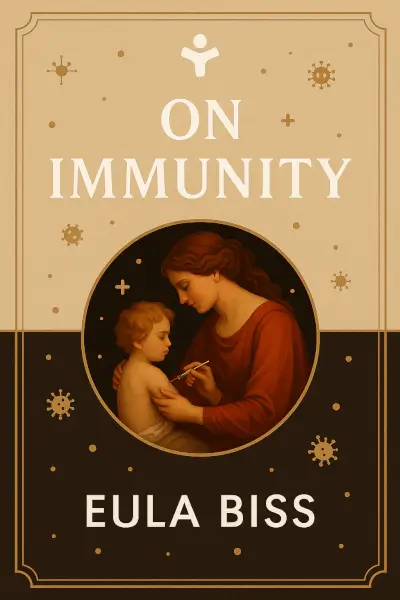
On Immunity: An Inoculation
Ready to Take Action?
Get the Mentorist app and turn insights like these into daily habits.