Why a vaccinated child can be more at risk than an unvaccinated one
Picture a mother whose daughter has had every vaccine on schedule, on time, no exceptions. You'd expect that daughter to be about as safe from measles as a child can be. But if that family lives in a neighborhood where many other parents have opted out of vaccination, the fully vaccinated girl can actually be at higher risk of catching measles than an unvaccinated child living in a highly vaccinated town across the state.
That sounds backwards until you understand what vaccines are actually protecting you from. No vaccine works perfectly in every body. Some children who receive a shot never develop full immunity, and immunity from certain vaccines fades over time. What actually stops a disease from spreading is not any single vaccinated body, but the wall of immune bodies surrounding it. When enough people in a community carry immunity, a virus runs out of places to go. It cannot jump from host to host fast enough to sustain an outbreak, so even the small number of people whose vaccines failed, along with those who cannot be vaccinated at all, end up sheltered by the immunity circulating around them. Eula Biss came to think of this as a kind of banking system: every vaccinated body is a deposit that others can draw on, whether or not they ever contributed themselves.
This idea, now called herd immunity, was first noticed by a doctor in 1840, who observed that vaccinating only part of a population against smallpox could stop an epidemic in its tracks. It sounds abstract until a disease actually moves through a population, and then it becomes visible as a threshold. Below a certain proportion of immune people, outbreaks flare and die down in waves. Above it, disease can barely get a foothold.
The uncomfortable part of this idea is that it makes immunity a shared resource rather than a private possession. You are not just protecting your own child when you vaccinate. You are protecting the newborn too young for her first shot, the child with a compromised immune system, the person whose vaccine simply didn't take. And you, in turn, depend on everyone around you doing the same. Refusing to participate doesn't just risk your own household. It draws down a fund that other people, often more vulnerable ones, are relying on.
Start by treating your own vaccination status as part of a shared resource rather than a purely private decision. Look up the vaccination rate in your community or your child's school, since that number tells you more about your actual risk than your own vaccine record alone. When you're deciding whether a shot is worth it for someone healthy and low-risk, remember to weigh the newborns, the immune-compromised, and the people whose vaccines simply failed, who are all depending on the immunity circulating around them. If you ever advocate for vaccine exemptions or policy changes, ask who exactly would be drawing down the shared protection you'd be removing, and whether you're comfortable with that trade.
What You'll Achieve
You come to see immunity as something you hold partly in trust for other people, not just a personal shield, so that vaccination decisions widen to include the vulnerable people around you and you stop evaluating risk purely in terms of your own household.
Treat immunity as a shared account
*Check your community's vaccination rate*
Look up the immunization rate at your child's school or in your neighborhood, since that number tells you more about your actual risk than your own vaccine record alone.
*Vaccinate even when you feel low-risk*
If you're weighing whether a shot is worth it for someone healthy, remember newborns too young to be vaccinated, people with compromised immune systems, and anyone whose vaccine simply didn't take are all relying on the immunity circulating around them.
*Weigh who draws on the shared protection*
Before pursuing an exemption or opting out, ask specifically who would be affected by the immunity you'd be withdrawing, not just what risk you personally would be taking on.
*Treat immunity as a deposit, not just a shield*
Think of each vaccination as a contribution to a collective account that other, more vulnerable people can draw on, whether or not they ever contributed themselves.
Reflection Questions
- Who around you depends on immunity they can't generate for themselves?
- How would you find out the actual vaccination rate in your community before assuming your family is protected?
- What would change in your own decisions if you thought of immunity as a shared account rather than private property?
Personalization Tips
- A parent who assumes their vaccinated child is fully protected checks the school's immunization rate before relaxing, since a low rate changes the actual risk.
- Someone eligible for a flu shot but tempted to skip it because they rarely get sick decides to get it anyway, thinking of the coworker undergoing chemotherapy nearby.
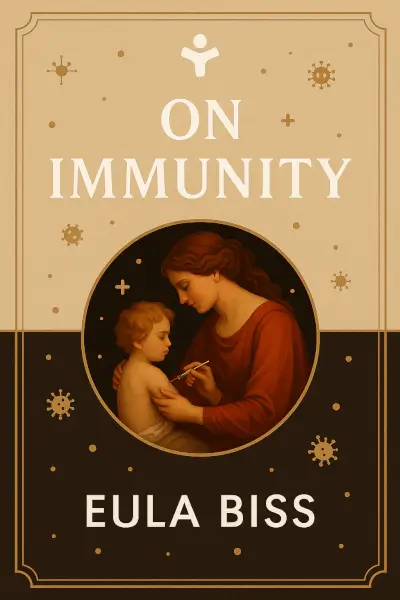
On Immunity: An Inoculation
Ready to Take Action?
Get the Mentorist app and turn insights like these into daily habits.