Why a girl who barely learned science beat her Harvard classmates within a month
When Catherine Pakaluk arrived at Harvard, she was certain she'd made a mistake. Her small high school had been heavy on literature and light on math and science, and she'd spent years frustrated that she wasn't being prepared for the scientific career she wanted. Walking into her first lab, she watched classmates who'd taken AP calculus and AP chemistry breeze through material she was seeing for the first time. I was completely disadvantaged, she said, certain she'd spend four years playing catch-up.
Then something unexpected happened. About a month in, the gap closed. The students who'd arrived with years of advanced coursework hit the same wall everyone hits in college-level science, and Catherine, it turned out, had something they didn't. Soon those same classmates were coming to her for help with their lab reports.
What had she been doing for all those years instead of memorizing formulas? Reading. Acres of it. And according to Catherine, that reading had rewired something more fundamental than content knowledge. Reading literature does this thing to your brain, to the way you think about information, which is inherently superior to mastering recipes of skills, she said. She hadn't been taught scientific facts earlier than her peers. She'd been taught, without anyone calling it that, how to think, how to follow an argument, weigh evidence, and connect one idea to the next.
This is the case Sarah Mackenzie builds around reading aloud: that its academic payoff isn't confined to English class. Economist Joseph Price found that one extra day per week of parent-child read-aloud time during a child's first ten years raised standardized test scores by as much as fifteen to thirty percentile points. Data from the Organization for Economic Co-operation and Development showed the same pattern regardless of family income, children read to more often scored the equivalent of half a year's extra schooling.
The mechanism isn't magic. A child who is read to hears vocabulary and sentence structures far more sophisticated than ordinary conversation, because even simple picture books use richer language than we do at the dinner table. And because listening comprehension outpaces reading comprehension for years, a child can absorb ideas well above what she could decode on her own. Fill that reservoir long enough, in any genre, and it turns out to serve a physics lab as readily as an essay.
Start tonight by picking something a notch above what your child could read solo, because a child listening can follow language far ahead of what they could sound out themselves, and that gap is where the real growth happens. Keep going even after your child becomes a confident independent reader, since the vocabulary and reasoning benefits don't stop just because decoding is no longer the obstacle. Pay attention to the words in the books you choose and notice how much richer they are than your everyday conversation, then lean into that instead of avoiding it. And when you're tempted to trade reading time for one more worksheet in a subject you think matters more, remember that the thinking skills built through story have a habit of showing up, unannounced, in labs and essays alike.
What You'll Achieve
The listener stops treating reading aloud as a nice-to-have that competes with real academic prep, and starts treating it as the academic prep itself. Visibly, they choose story time over an extra worksheet or drill session on a hard day, and they stop worrying that a subject-light childhood dooms a child in an unrelated field later.
Make reading aloud your core academic strategy
*Read above their independent level*
Choose books slightly harder than what your child could decode alone, since listening comprehension outpaces reading comprehension for years, and that gap is where real growth happens.
*Keep going after they can read alone*
Continue reading aloud once your child becomes a confident independent reader, because the vocabulary and reasoning benefits don't stop just because decoding is no longer the obstacle.
*Notice the vocabulary gap*
Compare the words you use at dinner with the words in the books you read together, and lean into richer language rather than avoiding it.
*Trust the transfer*
Resist trading story time for one more drill in a subject you think matters more, since reasoning skills built through story tend to show up later in unrelated fields.
Reflection Questions
- Which of your child's current struggles might actually be eased by more reading rather than more tutoring in that specific subject?
- Do you know whether the vocabulary in the books you read together is richer than what you use in daily conversation?
- What would change if you trusted that skills built through story could transfer to subjects you've never connected them to?
Personalization Tips
- A parent anxious that their child isn't getting enough exposure to coding or math might still choose to read them an adventure novel most nights, trusting the reasoning skills built there will transfer later.
- Someone stuck in traffic on the school run could swap a rushed spelling drill for ten minutes of a chapter book on audio, banking vocabulary rather than one more round of memorization.
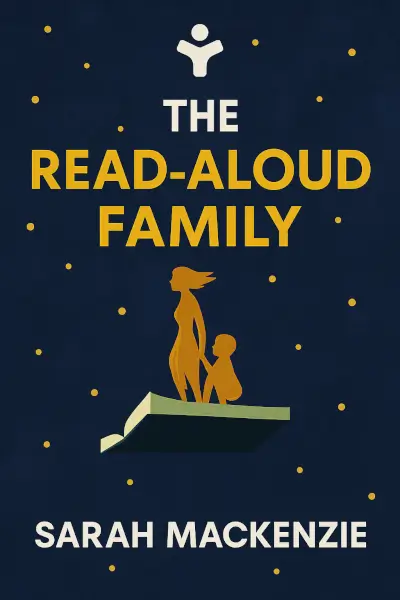
The Read-Aloud Family: Making Meaningful and Lasting Connections with Your Kids
Ready to Take Action?
Get the Mentorist app and turn insights like these into daily habits.