Why one mother threw out three-quarters of her daughter's toys and the girl never noticed
Mia was six, and her bedroom floor had disappeared. Somewhere under the stuffed animals, the broken robot with no batteries, and the fast food toys nobody remembered asking for, there was carpet, but nobody in the family could say for certain what colour.
Her mother had tried the twenty-minute tidy-up a hundred times. Within a day the room would look exactly as it had before, and Mia herself seemed no calmer for the tidying: still picky about food, still unable to settle into any one game for more than a few minutes before wandering off to find something else.
This is the pattern Kim John Payne describes seeing again and again in his work with families: a child surrounded by so much that nothing can be fully valued. The mountain itself sends a message, Payne argues, whether or not anyone intends it. Surrounded by endless options, a child doesn't conclude that they are rich in choice. They conclude that none of it is quite enough, and their emotional gesture becomes simply more.
The fix isn't better organisation. It's radical reduction, done without the child in the room, because a child asked to help will fight to keep almost everything, including toys they haven't touched in a year.
Payne's guidance is to halve the pile, then halve it again, watching in particular for toys that are too finished to leave anything for a child to bring to them, the ones that light up, talk, or do exactly one thing and nothing else. What tends to survive that cull are the plainest objects: simple dolls, building blocks, a basket of cloth and clothespins. These are the toys, Payne notes, that children pour themselves into rather than simply operate.
The surprising part, seen across many families, is how rarely children protest. Once the extra is gone and the room feels calm rather than crowded, most children don't ask where everything went. They just start playing, differently and more deeply, with what's left.
Start by gathering every toy in the house, the bathtub bin, the basket by the phone, the pile on the kitchen table, into one place so you can actually see how much there is. Do the sorting without your child present, because they will fight to keep almost anything if you try to decide together, and halve the pile, then halve it again. As you go, ask whether each toy invites your child's imagination or forecloses it, favouring the plain dolls and building blocks over the ones that flash, talk, or only do one thing. Whatever survives the cull earns a place in the room, and everything else goes into storage as a kind of lending library, allowed back in only one piece at a time as another leaves. You may be surprised by how little your child misses what's gone.
What You'll Achieve
You'll clear enough physical and mental space for your child to engage deeply with a handful of toys instead of skimming the surface of hundreds, and you'll likely see calmer, longer, more imaginative play within days.
Cut your child's toy pile to what matters
*Gather every toy in the house into one pile.*
Include the bathtub bin, the basket by the phone, and the ones that have migrated to the kitchen table.
*Halve it, then halve it again, without your child present.*
Children will fight to keep almost anything if you sort together, so do this alone or with your partner.
*Ask whether each toy invites imagination or forecloses it.*
Favor plain dolls, blocks, and simple figures over toys that light up, talk, or do only one thing.
*Store the rest as a lending library.*
Let toys return to the room later, one for one, instead of reopening the flood all at once.
Reflection Questions
- If you gathered every toy in your house into one pile right now, would the size of it surprise you?
- Which of your child's toys do they actually pour themselves into, and which ones just get operated?
- What are you afraid might happen if you removed three-quarters of what's in that pile?
- How would your own workspace or wardrobe change if you applied the same halve-it-twice rule?
Personalization Tips
- A parent overwhelmed by a toddler's bedroom might start with just the bathtub toys, halving that one bin before tackling the rest of the house.
- Someone drowning in their own inbox or wardrobe might apply the same halve-it-twice principle: not organising everything, just relentlessly reducing it first.
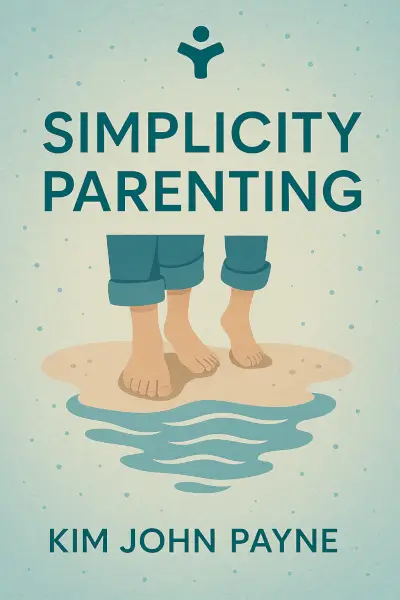
Simplicity Parenting: Using the Extraordinary Power of Less to Raise Calmer, Happier, and More Secure Kids
Ready to Take Action?
Get the Mentorist app and turn insights like these into daily habits.