He said he turned out fine after years of weekly beatings
Gordon was thirty-eight, a successful orthopedic surgeon, and he was falling apart. His wife of six years had just walked out, frightened by his sudden rages and worn down by his constant criticism. When Susan Forward asked him to describe his childhood, he glowed. His father was a distinguished cardiologist, a man his patients treated like a saint, the reason Gordon had gone into medicine at all.
Then Susan asked what had happened three months earlier, when Gordon mentioned wanting to explore holistic medicine. His father had exploded, told him to forget he was ever part of the family. Gordon laughed it off nervously. Maybe holistic medicine wasn't such a good idea after all.
She kept asking questions. Had his father always been so hard on him? Gordon said no, not really, just some yelling, and getting spanked once in a while, like any other kid. But something in the way he said the word spanked made Susan stop him. It turned out his father had used a belt on him two or three times a week, for offenses as small as a forgotten chore or a mediocre report card. He'd been struck on his back, his legs, his hands, his buttocks.
"I didn't bleed or anything," Gordon said. "I turned out okay."
Susan asked him one more question. His wife was a pediatrician. If she saw a child in her office with the marks Gordon used to carry, would she be legally required to report it?
Gordon didn't answer. He didn't need to.
This is the distinction Susan Forward builds much of her work around. Every parent loses their temper sometimes, forgets to be patient, says something they regret. That alone doesn't make someone what she calls a toxic parent. What makes a parent toxic is a pattern, consistent, repeated behavior that dominates a child's life, whether that's regular beatings dressed up as discipline, constant belittling, or a single act so severe it does damage on its own. Gordon had spent thirty-eight years calling a belt a spanking because the alternative, admitting his father had hurt him on purpose, again and again, was unbearable.
Gordon needed two things, not one. He needed practical tools to control the temper destroying his marriage. But tools alone wouldn't hold under pressure, because the real fuel for his anger was a store of rage against his father he had never once acknowledged. Forward calls this working on a double track, treating the current behavior while also going back to find where it came from. Skip the second track, and the first one eventually gives out.
Start by listening to your own language: if you catch yourself calling something just discipline or the way things were back then, stop and describe what actually happened as if you were telling it to a stranger, in plain physical detail. Then run it through a simple test, if another adult did exactly this to a child you love, would you call it acceptable, or would you call the police. Pick one behavior pattern that's costing you something right now, a temper, a habit of shutting people out, and trace it backward to see whether it connects to something from your childhood you've been minimizing. And pay attention to your body in these moments, clenched hands, a tight throat, because it often knows the truth before you're ready to say it out loud.
What You'll Achieve
You'll stop minimizing what happened to you by relabeling it with softer words, and you'll be able to describe your childhood accurately enough to see whether you're dealing with an isolated bad memory or a lasting pattern. Externally, you'll start addressing both your current behavior and its roots at the same time, instead of managing symptoms while the underlying cause keeps refueling them.
Name it plainly and test it fairly
Name the euphemism
Notice the soft word you use for what happened to you, spanking, strict, old school, and ask what it would sound like described plainly to a stranger, in physical detail.
Apply the outsider test
Ask whether the same behavior, done to any other child by any other adult, would be considered acceptable discipline or something you'd report.
Work both tracks at once
Pick one current behavior pattern that's causing you trouble right now, and one childhood experience it might connect to, and address both rather than only the one that's easier to see.
Watch your body for the tell
Notice physical agitation, clenched hands, a tight throat, as a sign that a memory carries more weight than you're consciously admitting.
Reflection Questions
- What softer word do you use for something that actually hurt you?
- If a stranger did this to a child you love, would you call it discipline or abuse?
- Which current struggle in your life might be fueled by something you've never fully faced from childhood?
- What happens in your body when you try to describe it plainly?
Personalization Tips
- A woman still calls her father's screaming fits "his temper" instead of naming the specific things he did.
- A man describes years of being locked in a closet as "strict parenting."
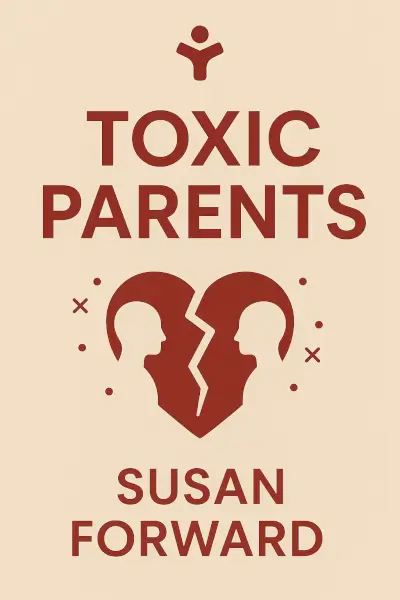
Toxic Parents: Overcoming Their Hurtful Legacy and Reclaiming Your Life
Ready to Take Action?
Get the Mentorist app and turn insights like these into daily habits.