Why fighting your addiction might be exactly what keeps it alive
Most approaches to addiction start from a simple assumption: someone who gets high all the time is an addict with an irresistible urge to use drugs, so the answer is to fight that urge, with willpower, with opioid blockers, with recovery programs built around confronting the craving head-on. Richard Schwartz argues that this assumption rests on a mistake he considers one of the most consequential in how we understand the mind, confusing a part with the burden it carries.
In Internal Family Systems, a burden is an extreme belief or emotion that got lodged into a part during a difficult experience, the sense of worthlessness that enters a child being belittled, the terror that attaches during an accident, the conviction that no one can be trusted after a betrayal. Schwartz's clinical experience convinced him that these burdens are not the same thing as the part carrying them, any more than a virus is the same thing as the computer it has infected. The part seeking drugs, in his account, isn't defined by the craving. It's a protector, doing a job it believes is necessary, keeping the person from feeling emotional pain so severe that, in the part's view, it might otherwise lead to suicide.
That reframe changes what you do next. Fight the craving, and you're fighting the part that's protecting the person, which, as Schwartz found across decades of work, tends to make the part dig in harder. Get to know the part instead, honor what it's been trying to do, and negotiate its permission to heal what it's protecting, and something different becomes possible: the part can eventually unburden the fear and responsibility it's been carrying, and the craving it once organized its entire existence around simply stops being necessary.
Schwartz says the transformation that follows unburdening is almost universal. The part that used to drive compulsive drug-seeking doesn't disappear, it becomes something else, often something that wants to help the person connect with others. The hypervigilant part that once scanned constantly for danger becomes an advisor on boundaries. The critic becomes a cheerleader. None of that is available as long as the burden and the part are treated as one and the same thing.
Pick one compulsive habit you've only ever tried to fight, and this time ask a different question, what pain might this behavior be keeping at bay. Notice the specific belief driving it, something like if I feel this, I won't survive it, and treat that belief as something a part is carrying, not as an unchangeable fact about you. Rather than trying to overpower the habit through sheer willpower, ask what that part would need to feel safe enough to loosen its grip, even slightly. Write down whatever answer comes, even if it surprises you, because it's likely pointing at exactly what needs attention next.
What You'll Achieve
The listener stops treating compulsive or destructive behaviors as the whole problem and starts asking what emotional pain they are protecting against, opening the possibility of addressing that pain directly instead of only fighting the behavior.
Question what the habit is protecting
Ask what the behavior is protecting, not just what it's doing.
When facing a habit you'd like to change, ask what pain it might be keeping at bay rather than jumping straight to stopping it.
Separate the belief from the behavior.
Notice the specific belief or fear driving the habit, something like if I feel this, I won't survive it, and treat that belief as something the part is carrying, not as an unchangeable fact.
Negotiate rather than battle.
Instead of trying to overpower the habit through willpower, ask the part what it would need to feel safe enough to loosen its grip.
Reflection Questions
- What compulsive behavior in your life have you only ever tried to fight, rather than understand?
- What would this behavior be protecting you from if you stripped away the behavior itself?
- What might become possible if that underlying fear were addressed directly instead of managed indirectly?
Personalization Tips
- Someone who reaches for their phone the instant they feel bored might discover the habit is protecting them from an old, uncomfortable sense of not being interesting enough to sit with themselves.
- A person who overworks to the point of exhaustion might find that the drive isn't ambition alone but a part guarding against an old fear of being seen as worthless if they ever slow down.
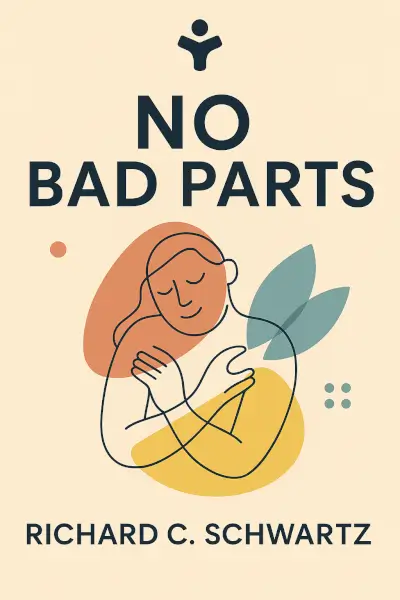
No Bad Parts: Healing Trauma and Restoring Wholeness with the Internal Family Systems Model
Ready to Take Action?
Get the Mentorist app and turn insights like these into daily habits.