Relying on Data, Not Anecdotes, Cuts Through the Parenting Noise
In the world of parenting, stories carry enormous weight. A colleague gushes that introducing a specific food saved their baby from chronic rashes, or an online post spins a terrifying tale about a rare crib incident. These narratives stick, often tugging at our fear or hope far more than dry research statistics. But here’s the catch: one person's outcome tells you almost nothing about what is likely (or unlikely) for you. This is where behavioral science says to set aside the urge for emotional certainty and lean on broader, better-quality evidence.
Population-level data, especially from randomized controlled trials or large longitudinal studies, captures thousands of messy real lives—the only way to account for all the hidden factors that shape outcomes. When a study adjusts for differences such as income, education, or health backgrounds, the conclusions become far stronger than what any single anecdote could suggest.
Parents, like all humans, are naturally swayed by what's most vivid or recent, a phenomenon known as the availability bias. The more dramatic the story, the more it crowds out rational consideration, leading us to overestimate rare risks or benefits. Data is the antidote to emotional overload. It won’t make every decision obvious, but it will anchor your choices in what’s most likely to help—not just what’s most loudly told.
Psychological research confirms that using structured data—rather than anecdotes—reduces regret, improves perceived control, and leads to long-term satisfaction with your choices, even when perfect certainty is impossible.
The next time you catch yourself reacting strongly to a friend's story or a heated comment thread, take a deep breath and ask: how common is this outcome, really? Then, search for evidence from large studies or official health resources that contextualizes the risk or benefit. Pay special attention to whether studies use randomization or control for family differences—these design details matter more than a hundred passionate testimonials. Admit that there’s always going to be some uncertainty, but by weighing the best data before anecdote, you’ll make decisions you can stand behind, even when opinions swirl around you.
What You'll Achieve
Gain clearer, less anxious decision-making by reducing the emotional sway of anecdotes; feel more grounded in the face of conflicting stories; enhance long-term confidence and satisfaction with chosen actions.
Put Evidence Before Stories When Deciding
Pause before acting on a dramatic story.
Next time a friend or influencer shares a personal tale—either a miracle or disaster—take a breath and remind yourself: one story doesn't make a trend. Don’t let emotion cloud judgment.
Seek summary data or controlled studies, not isolated cases.
Look for information that draws from large groups or well-designed experiments, not just testimonials or opinions. For example, check if health risks or benefits are based on population-level outcomes.
Question study quality and relevance.
Ask if the research adjusts for differences between families, uses randomization, or just looks for correlations. The best guidance comes from studies that control for confounding factors.
Accept uncertainty and use the best available evidence.
Recognize there will never be perfect studies on every issue. Take solace in the process: review the best you have, make an informed decision, and move on without agonizing over what-ifs.
Reflection Questions
- How often do emotional stories affect my decisions more than they should?
- Where could pausing to seek broader data reduce my worry or uncertainty?
- Am I regularly confusing what's emotionally vivid with what's statistically likely?
Personalization Tips
- When reading tense debates about vaccination, focus on data from major health organizations, not forum anecdotes.
- If a neighbor swears by a sleep method, check if it's supported by controlled studies before implementing.
- Evaluate claims about food allergies based on randomized trials rather than social media testimonials.
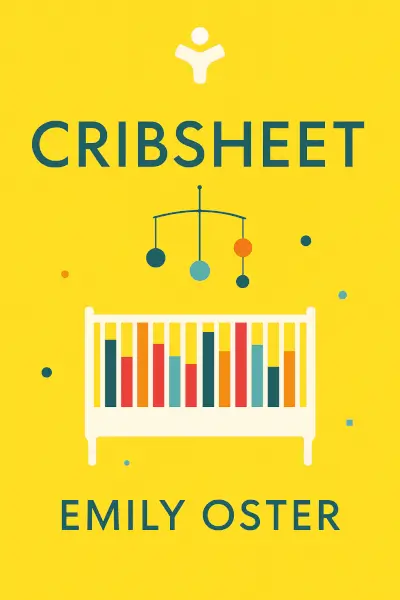
Cribsheet: A Data-Driven Guide to Better, More Relaxed Parenting, from Birth to Preschool
Ready to Take Action?
Get the Mentorist app and turn insights like these into daily habits.