Why one quiet cup of coffee can feel like the best hour of your year
Three months into caring for a newborn who won't sleep through the night, a new mother finally gets twenty uninterrupted minutes alone with a cup of coffee while her partner takes the baby for a walk. She describes the feeling afterward as something close to euphoria, not mild relief, actual joy, disproportionate to what has actually happened, which is that she got to sit still and drink something hot. Nothing about her underlying exhaustion has changed. And yet the twenty minutes felt enormous.
Viktor Frankl offers an explanation for this that he worked out inside a concentration camp, where relief of any kind was almost never available and yet, when it came, it landed with startling force. He compares suffering to a gas released into an empty chamber: the gas fills whatever space it's given, completely and evenly, whether the chamber is large or small. Human suffering behaves the same way, he argues, it fills the mind entirely, regardless of whether the underlying cause is, by some outside measure, large or small. Which means relief works by the same logic, in reverse. A trivial thing can produce genuine, unshrunken joy, because joy also fills whatever space is available to it.
Frankl saw this again and again in camp. When a transport of prisoners realised their train had not crossed the bridge that would have taken them to a camp with a crematorium, and was heading instead only to a smaller camp without one, he describes prisoners performing what he calls a dance of joy in the crowded railway carriage, over the removal of one specific horror, while everything else about their situation remained just as desperate. He also remembers a prisoner-cook who ladled soup without favouritism, dipping to the bottom of the pot for everyone equally regardless of friendship, and calls being served by that particular man one of only two pleasurable moments he could recall across many weeks.
None of this argues that suffering doesn't matter, or that people should be grateful for scraps. It argues something more useful: that the size of a mercy is not fixed by its size in the world, but by the size of the space it's allowed to fill in you. Refusing to let a small relief count as real, because your larger situation hasn't changed, doesn't make you tougher, it just means missing joy that was actually available.
The next time something small goes right in the middle of a hard stretch, resist the reflex to measure it against how big your overall problem still is. Let the relief fill you completely instead of rationing your own reaction to it. If it helps, deliberately hold a harder memory next to the present moment, a worse week, a worse year, and notice how much lighter this moment feels by comparison; that contrast is doing real work, not tricking you. And catch yourself if you find you're brushing past a genuine pleasure because it feels too small to deserve your attention, that's not toughness, it's a habit worth breaking, one you can start unlearning today.
What You'll Achieve
You'll let small relief count as real joy instead of discounting it because your bigger problem hasn't gone away. Visibly, you'll notice yourself pausing to actually enjoy small mercies, a quiet ten minutes, an easy conversation, rather than rushing past them toward the next demand.
How to feel the full size of a small relief
*Stop comparing relief to the size of your problem*
Don't let a small mercy feel smaller just because your larger situation hasn't changed.
*Let the mercy fill you completely*
Allow the pleasure to register fully instead of rationing your own reaction to it.
*Use a harder memory as your yardstick*
Deliberately hold a worse week or year next to the present moment to feel the contrast do its work.
*Notice when you're numbing pleasure*
Catch yourself brushing past a genuine pleasure because it feels too small to deserve attention.
Reflection Questions
- When did you last feel a disproportionate amount of joy from something small, and did you let yourself enjoy it or brush it off?
- What's a harder period you've survived that you could use as a deliberate point of comparison to feel the relief of right now?
- Where in your week do you catch yourself minimizing a genuine pleasure because your larger situation hasn't improved?
- What would change if you treated a small mercy as fully real rather than as a consolation prize?
Personalization Tips
- Someone recovering from surgery can feel real joy at walking unaided to the mailbox, even though full recovery is still months away.
- A person going through a stressful custody battle can let one calm, uneventful phone call with their child count as a genuinely good day.
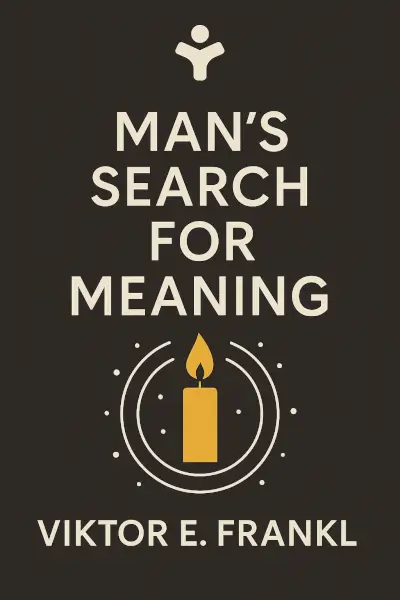
Man's Search for Meaning
Ready to Take Action?
Get the Mentorist app and turn insights like these into daily habits.